By Aaron Abramson, CEO of Jews for Jesus, author of Mission Design (IVP)
We were staring at a whiteboard filled with plans and ministry programs. Everyone in the room was working hard and doing good things, but when someone from our leadership team asked, “Which of these is really making a difference?”, the room fell silent.
It wasn’t that we lacked passion or effort, what we lacked was clarity. We lacked a clear picture of what our individual and collective efforts were accomplishing. We were busy, but we couldn’t say for sure what kind of fruit our efforts were bearing. In that moment, I realized an uncomfortable reality: we were flying blind.
That experience changed how I lead. I began to see that tracking and measuring impact isn’t about control or cold analytics. It’s about stewardship. It’s about paying attention to where God is at work and where He might be calling us to adjust.
The Biblical Case for Measurement
Throughout Scripture, we see people counting and recording what God was doing. After Peter’s sermon in Acts 2, Luke didn’t simply write “many believed.” He told us that about three thousand souls were added that day. Later, we read that the number of men came to about five thousand (Acts 4:4). These were not vanity statistics; they were markers of gospel advance.
Scripture is also honest about moments of limited impact. Even Jesus faced resistance in His hometown, where He “could do no mighty work” because of their unbelief (Mark 6:5–6). When the disciples failed to cast out a demon, Jesus used it as an opportunity to teach them about faith and prayer (Mark 9:28–29).
Measuring ministry outcomes helps us ask those same kinds of questions. What is bearing fruit? What isn’t? And what might God be teaching us through both?
Avoiding Success Theater
Ministry leaders are often powerful storytellers. That's what makes them so effective at casting vision for staff and stakeholders. But that same gift can also be used to re-frame or even spin stories in ways that highlight successes while downplaying or ignoring current challenges. When that happens, we risk losing touch with reality and becoming blind to weaknesses in our ministry.
In American Icon1, Bryce Hoffman tells how Alan Mulally was brought in to lead Ford during one of the most volatile periods in the auto industry. At the time, Ford was losing nearly $1 billion every quarter, about $250 million a week. Mulally began holding weekly meetings where each executive had to report the status of their area using a simple color system: green for on track, yellow for potential issues, and red for off plan. On the first day, every report was green. Mulally asked how that could be true if the company was hemorrhaging money.
The breakthrough came when one executive, Mark Fields, finally marked a project red. Instead of rebuking him, Mulally said, “That is great visibility. Who can help Mark with this?”. In that moment, honesty replaced fear, collaboration replaced competition, and Ford’s leaders began working together to solve real problems, sparking one of the greatest corporate turnarounds in history.
When we track real results, we stay grounded in reality. Is what we're doing working? If so, we can celebrate where God is moving and respond where He is not. Measurement, when done prayerfully, doesn’t shrink our faith. It refines it.
1 Hoffman, Bryce G. American Icon: Alan Mulally and the Fight to Save Ford Motor Company. Crown Business, 2012, chapter 5.
The Dangers of Overcounting
There is a cautionary side to all this. Counting can easily become a matter of pride, as King David discovered when he ordered a census of Israel’s fighting men (2 Samuel 24). The issue was not the act of counting, but the motive behind it.
When our identity becomes tied to numbers (attendance, donations, or baptisms) we risk losing sight of grace. Metrics are tools, not trophies. As Paul said, “Far be it from me to boast except in the cross of our Lord Jesus Christ” (Galatians 6:14).
Healthy measurement flows from humility, not self-importance.
Measuring What Matters Most
Years ago, while leading a ministry team in New York City, I realized our main indicator of success was “visits”. We tracked how many people we met each week, but not whether those relationships led to transformation. Were we meeting once with 100 people or 20 times with five? Activity wasn’t the same as impact.
We needed to rethink what we were measuring. That shift led us to focus on both outputs (what we did) and outcomes (the change we hoped to see).
For example, a food ministry might track:
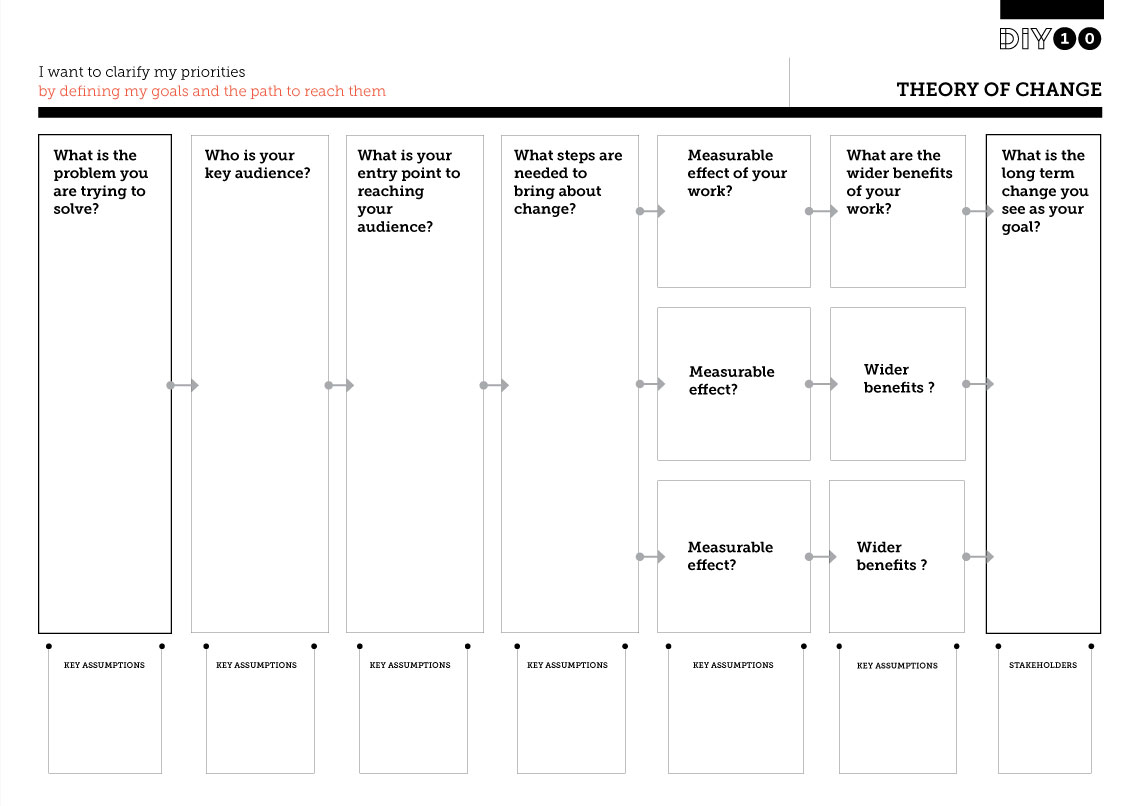
One tool that helped us was creating a Theory of Change - a simple visual map linking our activities to the results we wanted to see. We mapped out strategies we were going to take to reach our communities, goals that we had for each strategy, and the long-term outcomes we wanted to see so that we knew our strategy was working. Such a map forced us to clarify our purpose and align our efforts accordingly.
These kinds of metrics, often called Key Performance Indicators (KPIs), help us measure what matters and ensure that every resource serves the mission.
Tracking the Intangibles
Not all fruit is easily counted. How do you measure spiritual growth, generosity, or discipleship?
At Jews for Jesus, we developed a simple milestone system to track spiritual progress. We noted when someone began reading Scripture, attending a congregation, sharing their faith, or serving others. These moments gave us a clearer sense of how God was working beneath the surface.
Numbers can never tell the full story, but they help us tell a truthful one.
Building a Culture of Measurement
Implementing measurement takes time, patience, and consistency. A new dashboard or report won’t change a ministry overnight. What changes everything is culture.
Start small. Choose two or three key indicators that truly reflect the impact you hope to see. Revisit them regularly. Celebrate progress and talk openly with your team about areas that need prayer or growth. Over time, as people see that measurement leads to mission clarity, not control, they begin to embrace it.
Eventually, tracking outcomes becomes part of your team’s rhythm of worship and discernment.
Stewardship and Discernment
At its heart, measurement is about faithfulness. It helps us decide where to persevere, where to pivot, and how to steward what God has entrusted to us.
Still, no spreadsheet can replace discernment. Proverbs 3:5–6 reminds us, “Trust in the Lord with all your heart, and do not lean on your own understanding. In all your ways acknowledge Him, and He will make straight your paths.”
We measure not to control outcomes, but to understand where God is moving and how we can follow Him more faithfully.
When done with humility and prayer, tracking impact helps leaders stay focused, fruitful, and faithful to the mission that matters most.
Want to Read More from Aaron Abramson?
There are more lessons to learn about how to ensure your ministries are ready for the ever-changing world we serve.
In Mission Design: Leading Your Ministry Through Organizational and Cultural Change, Aaron Abramson provides a step-by-step approach to help pastors, church planters, nonprofit leaders and mission entrepreneurs adapt and innovate ministries to reach the shifting world around us. This book provides the tools and insights you need to adapt, pivot, navigate, and kickstart change for your ministry. Book launched October 14, 2025 from IVP.
Aaron Abramson is CEO of Jews for Jesus and author of Mission Design: Leading Your Ministry Through Organizational and Cultural Change. Raised in a Jewish family in Seattle and later in Israel, he came to faith in Jesus after a life-changing encounter with the New Testament. Aaron holds a BA in Biblical and Intercultural Studies from All Nations Christian College (England) and an MPA from New York University. He and his wife, Victoria, live in London with their three children.